Buy ferienpass.eu ?
We are moving the project
ferienpass.eu .
Are you interested in purchasing the domain
ferienpass.eu ?
domain@kv-gmbh.de · 0541-91531010
Buy ferienpass.eu ?
How do you convert ln to ln?
To convert ln to ln, you do not need to do anything as they are the same function. The natural logarithm function is denoted by ln, so ln is already in the form of the natural logarithm. **
Why is ln(14) equal to ln(4)?
ln(14) is not equal to ln(4). ln(14) is the natural logarithm of 14, while ln(4) is the natural logarithm of 4. These two values are not equal to each other. **


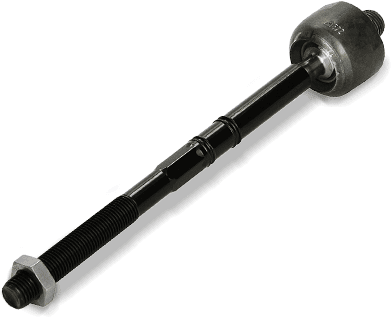
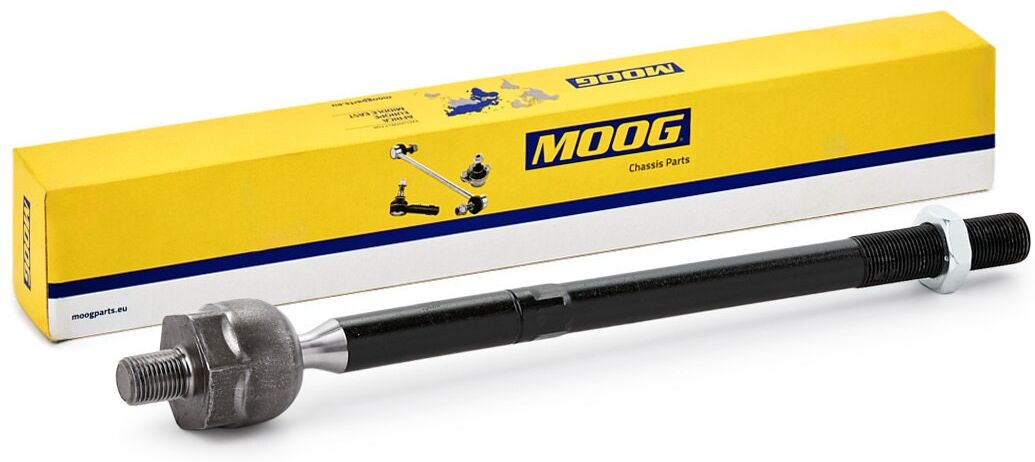
Similar search terms for MOOG-LN-AX-2677-Inner-tie
Top-Angebote
Products related to MOOG-LN-AX-2677-Inner-tie:
-
MOOG PE-AX-13279 Inner tie rodLength [mm]: 359; Diameter 1 [mm]: 16,9; Container Type: Box; Thread Size 1: M14X1.5; Thread Size 2: M14X1.5; Packaging length [cm]: 45; Packaging width [cm]: 5; Packaging height [cm]: 5; Fitting Position: Front Axle; Vehicle Equipment: for vehicles with electric power steering15,99 £*Shipping: 8,45 £Secure redirect to the provider
-
MOOG DE-AX-2474 Inner tie rodLength [mm]: 175; Diameter 1 [mm]: 8; Thread Type: with right-hand thread; Container Type: Box; Thread Size 1: M16X1.5; Thread Size 2: M12X1.5; Packaging length [cm]: 31,5; Packaging width [cm]: 5; Packaging height [cm]: 5; Fitting Position: Front Axle11,99 £*Shipping: 8,45 £Secure redirect to the provider
-
MOOG RE-AX-2831 Inner tie rodLength [mm]: 265; Diameter 1 [mm]: 14,5; Container Type: Box; Thread Size 1: M12X1; Thread Size 2: M14X1.5; Packaging length [cm]: 31,5; Packaging width [cm]: 5; Packaging height [cm]: 5; Fitting Position: Front Axle15,49 £*Shipping: 8,45 £Secure redirect to the provider
-
MOOG FD-AX-5110 Inner tie rodLength [mm]: 335; Diameter 1 [mm]: 24,2; Container Type: Box; Thread Size 1: M16X1.5; Thread Size 2: M18X1.5; Packaging length [cm]: 34,5; Packaging width [cm]: 8,5; Packaging height [cm]: 6,5; Fitting Position: Front Axle; Vehicle Equipment: for vehicles with electro-hydraulic steering11,49 £*Shipping: 8,45 £Secure redirect to the provider


-
Why is ln(x) = 1, ln(x) = pi, ln(x) = i with x > 0?
The natural logarithm function, ln(x), is the inverse of the exponential function, e^x. When ln(x) = 1, it means that e^1 = x, so x = e. When ln(x) = pi, it means that e^pi = x. And when ln(x) = i, it means that e^i = x. In all cases, x is a positive real number because e raised to any real number or imaginary number is always positive. **
-
Why are ln(0.5) and ln(2) the same?
ln(0.5) and ln(2) are the same because they are inverse operations of each other. The natural logarithm function ln(x) is the inverse of the exponential function e^x. So, ln(0.5) is the exponent to which e must be raised to equal 0.5, and ln(2) is the exponent to which e must be raised to equal 2. Since 0.5 and 2 are reciprocals of each other, their natural logarithms will be equal. **
-
Is there a difference between AX and AX?
There is no difference between "AX" and "AX" as they are the same sequence of letters. If the question is referring to different contexts or meanings of "AX," it would be helpful to provide more specific information to address any potential differences. **
-
What is ln?
ln stands for the natural logarithm, which is the logarithm to the base of the mathematical constant e (approximately equal to 2.71828). It is commonly used in mathematics to solve exponential equations and to represent the inverse operation of the exponential function. The natural logarithm is denoted by the symbol ln(x), where x is the number for which the logarithm is being calculated. **

What is the derivative of ln(x) + x + ln(2x)?
The derivative of ln(x) is 1/x, the derivative of x is 1, and the derivative of ln(2x) is 2/x. Therefore, the derivative of ln(x) + x + ln(2x) is 1/x + 1 + 2/x. **
Is ln(e^x) and e^(ln(x)) the same?
No, ln(e^x) and e^(ln(x)) are not the same. ln(e^x) simplifies to x, while e^(ln(x)) simplifies to x. This is because ln(e^x) is the natural logarithm of e raised to the power of x, which simplifies to x, and e^(ln(x)) is e raised to the power of the natural logarithm of x, which also simplifies to x. Therefore, ln(e^x) and e^(ln(x)) are equivalent and both simplify to x. **
Top-Angebote
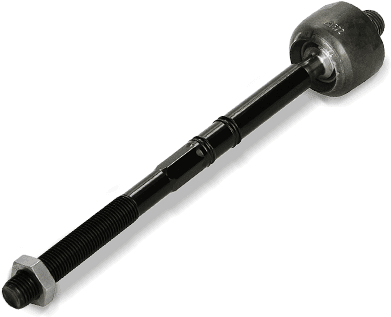
Products related to MOOG-LN-AX-2677-Inner-tie:
-
MOOG RE-AX-2091 Inner tie rodLength [mm]: 229,5; Diameter 1 [mm]: 14; Thread Type: with right-hand thread; Container Type: Box; Thread Size 1: M14X1.5; Thread Size 2: M14X1.5; Packaging length [cm]: 31,5; Packaging width [cm]: 5; Packaging height [cm]: 5; Fitting Position: Front Axle9,59 £*Shipping: 8,45 £Secure redirect to the provider
-
MOOG BM-AX-3683 Inner tie rodLength [mm]: 262; Thread Type: with right-hand thread; Container Type: Box; Thread Size 1: M18X1.5; Thread Size 2: M16X1.5; Packaging length [cm]: 31,5; Packaging width [cm]: 5; Packaging height [cm]: 5; Fitting Position: Front Axle14,99 £*Shipping: 8,45 £Secure redirect to the provider
-
MOOG PE-AX-13279 Inner tie rodLength [mm]: 359; Diameter 1 [mm]: 16,9; Container Type: Box; Thread Size 1: M14X1.5; Thread Size 2: M14X1.5; Packaging length [cm]: 45; Packaging width [cm]: 5; Packaging height [cm]: 5; Fitting Position: Front Axle; Vehicle Equipment: for vehicles with electric power steering15,99 £*Shipping: 8,45 £Secure redirect to the provider
-
MOOG DE-AX-2474 Inner tie rodLength [mm]: 175; Diameter 1 [mm]: 8; Thread Type: with right-hand thread; Container Type: Box; Thread Size 1: M16X1.5; Thread Size 2: M12X1.5; Packaging length [cm]: 31,5; Packaging width [cm]: 5; Packaging height [cm]: 5; Fitting Position: Front Axle11,99 £*Shipping: 8,45 £Secure redirect to the provider
-
How do you convert ln to ln?
To convert ln to ln, you do not need to do anything as they are the same function. The natural logarithm function is denoted by ln, so ln is already in the form of the natural logarithm. **
-
Why is ln(14) equal to ln(4)?
ln(14) is not equal to ln(4). ln(14) is the natural logarithm of 14, while ln(4) is the natural logarithm of 4. These two values are not equal to each other. **
-
Why is ln(x) = 1, ln(x) = pi, ln(x) = i with x > 0?
The natural logarithm function, ln(x), is the inverse of the exponential function, e^x. When ln(x) = 1, it means that e^1 = x, so x = e. When ln(x) = pi, it means that e^pi = x. And when ln(x) = i, it means that e^i = x. In all cases, x is a positive real number because e raised to any real number or imaginary number is always positive. **
-
Why are ln(0.5) and ln(2) the same?
ln(0.5) and ln(2) are the same because they are inverse operations of each other. The natural logarithm function ln(x) is the inverse of the exponential function e^x. So, ln(0.5) is the exponent to which e must be raised to equal 0.5, and ln(2) is the exponent to which e must be raised to equal 2. Since 0.5 and 2 are reciprocals of each other, their natural logarithms will be equal. **
Similar search terms for MOOG-LN-AX-2677-Inner-tie
-
MOOG RE-AX-2831 Inner tie rodLength [mm]: 265; Diameter 1 [mm]: 14,5; Container Type: Box; Thread Size 1: M12X1; Thread Size 2: M14X1.5; Packaging length [cm]: 31,5; Packaging width [cm]: 5; Packaging height [cm]: 5; Fitting Position: Front Axle15,49 £*Shipping: 8,45 £Secure redirect to the provider
-
MOOG FD-AX-5110 Inner tie rodLength [mm]: 335; Diameter 1 [mm]: 24,2; Container Type: Box; Thread Size 1: M16X1.5; Thread Size 2: M18X1.5; Packaging length [cm]: 34,5; Packaging width [cm]: 8,5; Packaging height [cm]: 6,5; Fitting Position: Front Axle; Vehicle Equipment: for vehicles with electro-hydraulic steering11,49 £*Shipping: 8,45 £Secure redirect to the provider
-
MOOG HO-AX-7911 Inner tie rodLength [mm]: 224; Diameter 1 [mm]: 13,5; Paired product: HO-AX-7910; Thread Size 1: M20X1.5; Thread Size 2: M14X1.5; Packaging length [cm]: 31,5; Packaging width [cm]: 5; Packaging height [cm]: 5; Fitting Position: Front Axle Left12,49 £*Shipping: 8,45 £Secure redirect to the provider
-
Is there a difference between AX and AX?
There is no difference between "AX" and "AX" as they are the same sequence of letters. If the question is referring to different contexts or meanings of "AX," it would be helpful to provide more specific information to address any potential differences. **
-
What is ln?
ln stands for the natural logarithm, which is the logarithm to the base of the mathematical constant e (approximately equal to 2.71828). It is commonly used in mathematics to solve exponential equations and to represent the inverse operation of the exponential function. The natural logarithm is denoted by the symbol ln(x), where x is the number for which the logarithm is being calculated. **
-
What is the derivative of ln(x) + x + ln(2x)?
The derivative of ln(x) is 1/x, the derivative of x is 1, and the derivative of ln(2x) is 2/x. Therefore, the derivative of ln(x) + x + ln(2x) is 1/x + 1 + 2/x. **
-
Is ln(e^x) and e^(ln(x)) the same?
No, ln(e^x) and e^(ln(x)) are not the same. ln(e^x) simplifies to x, while e^(ln(x)) simplifies to x. This is because ln(e^x) is the natural logarithm of e raised to the power of x, which simplifies to x, and e^(ln(x)) is e raised to the power of the natural logarithm of x, which also simplifies to x. Therefore, ln(e^x) and e^(ln(x)) are equivalent and both simplify to x. **
* All prices are inclusive of VAT and, if applicable, plus shipping costs. The offer information is based on the details provided by the respective shop and is updated through automated processes. Real-time updates do not occur, so deviations can occur in individual cases. ** Note: Parts of this content were created by AI.